Showing posts with label vegetarian. Show all posts

Wednesday, 24 June 2015

The Low FODMAP Festival Survival Guide

Hi Fodmappers

Hope you've got your wellies ready? It's festival time! And you know what that means? Food, drink and festival loos! I know that sounds like a Fodmapper's nightmare but don't panic! A little planning will get you a long way. And with that in mind, here's my ...

Low FODMAP Festival Survival Guide


First choose your Festival

If you have tickets for Glastonbury this weekend then it's probably too late to talk to you about choosing your festival. But for those of you who haven't - this is where a successful festival experience starts! Choosing the festival that's right for you can mean you have an event to look forward to, rather than one you'll dread. This is important, not only because you want to enjoy yourself, but because many people find their IBS is triggered by stress. If the mere thought of a huge festival and thousands of people worries you, then that's not the event for you. Luckily, there are plenty of festivals out there (from rock, jazz, folk, medieval festivals, literary and food festivals - to name but a few) so you're not short of options. So start by choosing one that you will enjoy.

Location, location, location.

When you're thinking about your event, you might also want to think about the location. Big events in far off places are all well and good when you're feeling well. But when you're not, do you really want to be stuck miles from home in a muddy field? Only you know how well controlled (or not) your symptoms are, and how ready you are for the festival loo experience. (We get to that a bit more in a minute). If you're not feeling great (yet) you may want to look for an event happening near to home. You'll be able to relax knowing that you can easily nip off if you do need to beat a hasty retreat.

Food

Once you've decided on your event you might want to start thinking about what you're going to eat. Festivals can be great places to discover new foods and it's likely that there will at least be gluten free and vegetarian options available, but they may not be completely FODMAP friendly. Be prepared to ask whether the food contains onions, garlic, soya etc. This is where food festivals come into their own. The sellers take pride in knowing about the ingredients and in talking to you about the different food on offer. Don't worry about being seen as a fussy eater. At a food festival everyone is a fussy eater. That's kind of the point.

Of course if you're camping you can take a stove, some pans and all the ingredients you'd use at home. You could even make cooking for your friends part of your festival experience. Be sure to remember to pack some wheat free cereals and a carton of long-life lactose free milk for breakfasts.  Rice cakes, peanut butter and bananas are another great festival stand by.

If you're just going for the day, why not take a picnic? Make some gluten-free sandwiches to take with you. Cucumber sarnies with the crusts cut off are so British, and so summery. A tub of salad, some carrot sticks to nibble on, nuts, plain crisps and a selection of cheeses should keep even the hungriest Festival goers happy. Or take a mini barbecue and rustle up some vegetable kebabs and grilled halloumi. Yum!

Drink

Let's face it, festivals are a chance to let your hair down and most people like to enjoy a drink or two (or more) as part of the event. Unfortunately alcohol is a gut irritant and can trigger symptoms for a lot of people. But this doesn't mean you have to avoid alcohol altogether. One glass of wine or one can of beer should be OK - especially if consumed with food.

You should also be aware that coffee, strong tea and certain fruit juices can also trigger symptoms so make sure you have a bottle of water to hand.

Festival Toilets

This has got to be the one thing that makes even the most hardened festival-goer cringe. Festival loos are never the most pleasant (I pity the people who have to clean them) but for Fodmappers they have to be the scariest thing about a Festival. If it's not the long queues then it's the inevitable lack of toilet paper when you get there. But I'm sure you don't need me to remind you to pop some toilet paper into your bag. That's just a normal day out, right?

But if you're going to Glastonbury, you might be in for a pleasant surprise. They now have a range of different loos including provision for people with disabilities. In fact, they are so proud of them that the loos even get their own page on the Glastonbury Festival website. Who would have guessed?

As for the queue, you may just have to forego etiquette and nip to the front. Needs must.

And Finally

Remember that a festival is a great opportunity to meet up with friends, enjoy some fantastic entertainment and most of all, have some fun. So relax (remember that bit about stress?) and have a great time.

'Til next time Fodmappers - Stay fabulous!

Sunday, 1 March 2015

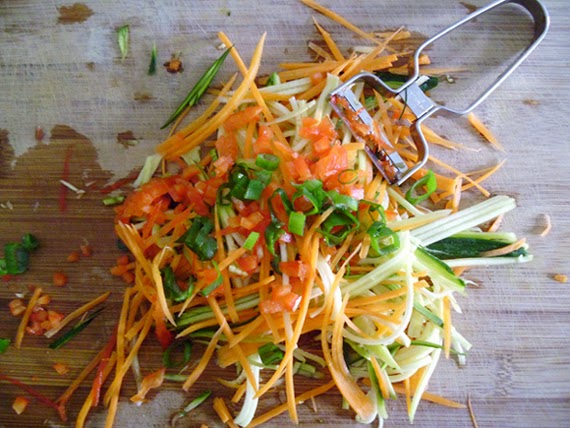
Low FODMAP Veggie Noodle Pot To Go

Hi again Fodmappers

Today I've got an easy hot lunch idea for you. And because I often forget the vegans amongst us - this one is vegan friendly.

You may remember a few weeks ago I shared a recipe for a Veggie Noodle Soup. Well it occurred to me that it would be easy to make something similar as a noodle pot to take with you to work or college. All you need is access to a kettle or a microwave and a few minutes of preparation the night before.

Vegetarian Noodle Pot


Suggested Ingredients

1 small to medium carrot
1 small courgette
Small piece of sweet pepper
Some spring onion greens
1/2 block of rice noodles
A few small cubes of firm tofu
A pinch of ground ginger
1 tsp of garlic infused oil
A dash of soy sauce
A pinch of sugar
A little salt and pepper

Method

Shred or grate the carrot and courgette.
Finely chop the spring onion greens and red pepper.
Pop all the ingredients into a microwavable plastic soup pot and snap on the lid.

When you're ready for lunch, simply pour on boiling water and allow to stand for a few minutes or add water and pop into a microwave. You'll have a quick, easy and nutritious lunch in no time. Low fodmap to go!


Have a great week - and stay fabulous! x

Thursday, 26 February 2015

Why Keeping A Food Diary Didn't Help My IBS ..

And How You Can Make It Work For You.


Hi Fodmappers - How are you?

I have a couple of questions for you. Do you keep a food diary? And how useful are you finding it?

When I was diagnosed with IBS (and this was pre-fodmap) my G.P suggested I keep a food diary as I felt sure that my symptoms were, at least, aggravated by certain foods. And as this made perfect sense, I did just that. I still have it as it doubles up as my recipe book but looking back it's scary to see what I was eating!

But as careful as I was in recording everything I ate, as well as keeping notes on the events of the day in case stress was a factor, I couldn't make head or tail of what was making me ill. I had already cut out coffee and orange juice at that point as I had noticed that those were definitely a trigger for me but I wasn't getting any further in pin-pointing which other foods were a problem for me. Does that sound familiar?

When I discovered FODMAPs I realised why this was. I was going about this the wrong way round!

Let me give you an example of a meal from just one of my old diary entries. It was one of our favourites - Vegetarian Spaghetti Bolognaise.

The ingredients we would use were onions, garlic, red peppers, soya mince, passata, herbs and, of course, spaghetti. Nothing complicated there really, just a typical vegetarian meal, but if i'd known then what i know now! OMG!

In case you are still new to the low-fodmap diet, let me take you through that list.

Onions = High Fodmap
Garlic = High Fodmap
Red Peppers = Low
Soya =  High Fodmap
Tomatoes = Low
Herbs = Low
Spaghetti (Wheat) = High Fodmap

Looking at that, it really is no surprise I was unwell!

One of the problems with a food diary is that you need to list all the ingredients of everything you eat separately. And that includes the ingredients of shop bought products. You soon learn this, if you haven't already, as even foods which appear to be fodmap friendly (such as gluten free breads) can contain high fodmap ingredients like soya flour. But without knowing about fodmaps, unravelling the ingredients and the symptoms is pretty near impossible. Or at least I found it so.

As soon as I learned about the low-fodmap diet it just made so much sense. Rather than looking for a needle in a haystack (which is what I felt I was doing) you cut out ALL likely trigger foods and reintroduce them a few weeks later, one at a time, to see which ones cause the problems. It's so simple and so logical! This is when keeping a food diary comes into it's own. You can do just what I was failing to do, you can pinpoint EXACTLY what is upsetting you. And you can see how much better you can feel.

One of my first low-fodmap entries read;

"Felt pretty good most of the day, though a little bloating (very little) after lunch and evening meal. Both times this was short lived (less than an hour) and no pain!"

I'd been in a lot of pain prior to starting my low-fodmap journey, and though I think I was reluctant to get my hopes up at that point, that entry showed me there might just be light at the end of the tunnel. The bloating lessened soon after.

As for the bolognaise - I'm sure I've mentioned before that cutting out high-fodmap foods isn't about depriving yourself, it's about replacing them with low-fodmap alternatives such as spring onion greens instead of onions, garlic infused oil instead of garlic and opting for wheat free pasta. We do just that and we use diced aubergine instead of soya mince for that bolognaise texture. (See how I've just sneaked in another yummy recipe for you?) I'm also really enjoying discovering new pastas. Who knew there were so many out there?!

So if a food diary isn't working for you, maybe consider going about it the other way around?

'Til next time Fodmappers - Stay Fabulous! x

Sunday, 23 November 2014

Low-FODMAP Mince-Pies


Well it wouldn't be Christmas without them, would it?

Hi again Fodmappers. This will be my first Christmas since going low-fodmap and I realised I'm going to have to get organised if I want to enjoy some festive treats. So for the last few weeks I've been thinking about the things that really make Christmas for me, and mince-pies have got to be top of my list.

But mince-pies are normally a bit of a fodmappers nightmare. First there's the wheat in the pastry, but even if you go wheat free there's still the apple and dried fruit in the mincemeat. If you're buying ready made there may very well be other ingredients to watch for too - did someone say fructose-glucose syrup? It was only when I decided to try and create some low-fodmap mincemeat of my own that I discovered there's even fructose-glucose syrup in tubs of candied peel!

Eventually I struck on an idea, after all there are other Christmas flavours to be had. So here's my own twist on a Christmas favourite. These are vegetarian, wheat-free, gluten-free, apple-free and don't even contain the dried fruit that is normally found in mince pies - but are still very tasty. If you're vegan you could try replacing the butter with coconut oil. I haven't tried that but I imagine it would be yummy.

The directions below are for 12 mince pies. I hope you enjoy them.

Ginger, Orange and Walnut Mince-Pies

Pastry Ingredients

200g Gluten Free Plain White Flour
100g Butter
75g Cold Water

Mincemeat ingredients

6 x 1" Pieces of Bottled Stem Ginger
Zest of 1 Orange
Juice of 1 Orange
Zest of 1 Lemon
1/2 Tsp of Ground Cinnamon
1/2 Cup of Chopped Walnuts

First prepare the pastry.

Put the flour into a large bowl and add the butter. Work together until it resembles fine bread crumbs.
Add the water and stir through quickly until it begins to form a dough. Shape the dough into a ball and pop into the fridge for at least 30 minutes.

While the pastry is resting, prepare the mincemeat.


Chop the ginger into fine pieces and put into a pan with the orange zest, lemon zest, orange juice and cinnamon. Cook over a medium heat, stirring frequently, until it begins to take on a mincemeat like texture. Remove from the heat and allow to cool a little. Stir the chopped walnuts into the mixture.


Roll out the pastry and cut out circles using a pastry cutter. Be careful handling the pastry as gluten free pastry has less stretch than ordinary pastry. Place into a greased mince-pie tin. Put a dessertspoon of the ginger mince-pie filling into each pie and top with a star cut from the remaining pastry.

Bake in a pre-heated oven at 180C/350F for 20 minutes being careful not to overcook. Eat warm or allow to cool and sprinkle with icing sugar for the perfect festive finish.

Monday, 10 November 2014

Low-FODMAP Eating Out - Problem Solved


I have exciting news Fodmappers - I've found an easy option for meals out!

Up until now my default meal-out option has been jacket potatoes but that does get monotonous, so this evening my partner suggested asking if the pizza restaurant had a gluten free option, and guess what? They did! You wouldn't think someone could get so excited about eating in a pizza restaurant (or maybe you would?) but I was very happy. 

Why hadn't I thought of this before? A place where you can design your own meal from a choice of pizza toppings, and pick and choose from the salad bar is perfect for us Fodmappers. This is somewhere where such behaviour is normal, not fussy (I hate that people might think of me as a fussy eater) and no-one suspects a thing.

So this is my very simple tip for meals out. 

Go to a pizza restaurant (though maybe ring first just to check they do gluten-free pizza bases). Choose toppings which you know are low-fodmap - I had goats cheese, cherry tomatoes and olives, and grab yourself some tasty low-fodmap options from the salad bar. 

Of course, you'll need to avoid the temptation of the bread sticks and mayo-type salad dressings and remember to stick to small portions. I figured out that even the individual size pizza would have taken me over the safe level of tomatoes, maybe for other ingredients too. And sadly, desserts are off limits. Having said that, half a pizza, a bowl of carefully selected salad, and a glass of water was plenty.

I should also say that the food was great! So thank you Jess (our waitress). I doubt she'll ever see this blog but she made us feel very welcome. Which is why this is my second tip of the evening. ;)

So phone your friends, book a table and enjoy your evening - and share this post to solve a problem for others too.

Monday, 3 November 2014

Protein in the Vegetarian Low-FODMAP diet


The question is - are you getting enough?

Hi again fodmappers. 

A couple of times lately I've been asked how I manage to get enough protein on a vegetarian low-fodmap diet. It's a good question because, as you probably know, many of the usual vegetarian protein sources (legumes and some nuts) are off limits. Though I felt intuitively that I do get enough, it never hurts to do a bit of research and check. So that's been my project this last week.

I soon realised that, before looking at whether I was getting enough, I had to find out how much protein I should be having. That seems obvious I know, but when you constantly see ads for protein shakes, bars and protein based weight-loss programmes, the suggestion seems to be that none of us are getting enough, let alone anyone on a restricted diet!

The first figures I came across were that a sedentary man needs 56g a day and a woman needs 46g. Those figures weren't working for me for a simple reason, and that is that our need for protein must differ according to our body size, age and health, as well as our activity levels. After a while I tracked down a suggested intake of 0.66g of protein per kg of body weight for both men and women. (1) For me that works out at 31.43g of protein per day - much less than the average guidelines.

My next task, of course, was to find out how much protein there is in the food I eat. (A summary of just one day is at the end of today's blog). It's surprising what contains what!

I've recently converted to using cups as a way of measuring dry and liquid ingredients, but if you don't have these handy little measuring devices you might like to know that 1 cup is the same as 250ml. Simply find something in your kitchen that holds 250ml and you're away.

Dairy and Milk Alternatives

  • 1 large egg = 6g
  • 1 cup of grated cheddar cheese = 28g
  • 1 cubic inch of cheddar cheese = 4.2g
  • 1 cup of crumbled feta cheese = 21g
  • 1 cubic inch of feta = 2.4g
  • 1 cup of lactose free milk = 9g
  • 1 cup of almond milk = 1.25g
  • 1 cup of oat milk = 2.5g
  • 1 cup of oat milk = 0.25g

Nuts and Seeds

  • 1 cup of walnuts = 18g
  • 1 cup of brazil nuts = 19g
  • 1 cup of hazelnuts = 20g
  • 1 cup of sunflower seeds = 29g
  • 1 cup of sesame seeds = 26g
  • 1 cup of dried pumpkin seeds = 39g
  • 1 tbsp of peanut butter = 4g
  • 1 tbsp of almond butter = 3.35g
  • 1 tbsp of tahini/sesame seed paste = 3g

Grains

  • 1 cup of cooked buckwheat = 6g
  • 1 cup of cooked quinoa = 8g
  • 1 cup of cooked brown rice = 5g
  • 1 cup of cooked white rice = 4.2g
  • 1 cup dry oatmeal/porridge oats = 6g

Fruit and Vegetables

  • 1 medium banana = 1.3g
  • 1 medium kiwi fruit = 0.8g
  • 1 cup of spinach = 0.9g
  • 1 large potato (baked with skin) = 7g
  • 1 red or yellow bell pepper = 1g
  • 1 small courgette = 1.4g
  • 1 cup of shredded lettuce = 0.5g
  • 1 medium tomato = 1.1g
  • 1 cup of cubed butternut squash = 1.4g

Bread and Crackers

  • 1 slice of Genius triple seeded bread = 2.1g
  • 1 slice of Genius brown bread = 1.2g
  • 1 slice of Genius spicy fruit bread = 1.2g
  • 1 Kallo Organic unsalted rice cake =  0.6g
  • 1 Nairns oat cake = 0.8g

Pasta

  • 100g Orgran buckwheat spirals = 11.2g
  • 100g Orgran corn and vegetable spirals = 6.9g

Other
  • 100g of Tofu = 8g
  • 100g of canned chick peas = 4.3g

I could include much more ....

So, back to the question of whether I am getting enough protein. The only way this was going to be accurate was if I added it up as I went along. So one day last week I met a friend for a cuppa (Hi Jacqui) and kept notes.

My breakfast that day was 1 banana (1.3g) and a bowl of porridge made with half a cup of oats and 1 cup of lactose free milk (12g). Mid-morning I had a gluten free coconut and raspberry slice (4g). And lunch was a kiwi fuit (0.8g), a peanut butter sandwich on Genius fruit bread (6.4g) and a small savoury muffin (6g). The recipe for the muffin (and it's really easy) can be found here.

If you've been counting you'll know that comes to 30.05g of protein (remember I need to aim for 31.43g) and at that point I have to confess I stopped counting.

But this has been an interesting issue to explore. I had never realised what a difference there is in the protein content of the low-fodmap milks, for example, and how something as simple as a bowl of porridge can give a real protein boost to the start of your day. It's an exercise that's definitely worth doing.

And it's been reassuring. The low-FODMAP diet is complicated enough, especially for vegetarians and vegans, without worrying about protein too.

So a big thank you to those of you who have asked, you know who you are. It's been an eye-opener putting this list together, and an education. If there are any other topics you'd like me to explore, please let me know.

1. http://www.nal.usda.gov/fnic/DRI/DRI_Tables/recommended_intakes_individuals.pdf

Sunday, 26 October 2014

Veggie Savoury Muffins


Ooh look! Yummy savoury snacks. ;)

Hi again Fodmappers. As you can see I've been doing a bit of baking this week. But these aren't any muffins, these are fodmap friendly flour-free muffins! And they pack a bit of a surprise. These muffins are a nice source of veggie protein and they are incredibly easy to make. I confess I'm not into complicated cooking - I want to eat, not cook.

I've made these a couple of times now so they can't be bad eh? I discovered them at Everybody Loves Pretty and have pretty much stuck to that recipe so far.  However the second time I made them I used a mature cheddar rather than a mild one, and next time I'm going to try adding a little asafoetida as I felt they needed a bit of a bite. As onions are not a 'safe' food for me, asafoetida does go some way towards replacing that sharpness. (If you haven't discovered it yet, it's worth tracking down and adding to your spice collection.) But on with the recipe.

I used:

1/3 cup of quinoa grains
1/2 a cup of grated Cheddar Cheese
2 large eggs
1/3 cup of shredded spinach
A generous pinch of oregano
A generous pinch or basil
A sprinkle of salt and pepper.

(This makes 6 muffins).

Method:

First cook your quinoa. Rinse the grains well (I used my salad sprouter for this) and then toast them lightly in a large saucepan for a couple of minutes. Add 2/3 cup of cold water. Bring to the boil and then reduce to a simmer for approximately 15 mins or until it has absorbed all the water.

While the quinoa is cooking, preheat your oven to 350/180.

When the quinoa is ready, remove the pan from the heat and add the grated cheese, herbs, salt and pepper. Stir in well.

Finally add the eggs (make sure the pan and contents have cooled slightly so that the eggs don't cook on contact) and mix in.

Spoon mixture into muffin cases or directly into a greased muffin tin and bake for 20 to 25 minutes.
 
The finished bake has a texture part way between a muffin and a quiche which isn't as odd as it sounds. Give them a go, experiment with different flavours, and let me know what you think.

Sunday, 19 October 2014

Fodmap Friendly Halloween


Just a couple of weeks to go until Halloween and these little peppers were so cute I had to give them a try. I'd seen several recipes for these online but most were either meat filled or full of non-fodmap friendly ingredients. I decided to go for a Feta and Walnut filling, partly as those were ingredients I had in, and partly because walnuts look like brains. Yes I'm completely in the Halloween spirit already! 

As always, this is a vegetarian recipe but it could be very easily adapted for vegans, just skip the cheese! In fact feel free to tweak this recipe however you like (I did) but just remember to stick to low-fodmap ingredients.

So here's what I used

2 large yellow bell peppers.
Half a cup of quinoa grains.
A small handful of walnuts.
Approx 100g of feta cheese
8 to 10 pitted black olives
1 tomato.
Oregano
Basil
Black Pepper
Salt.

Cook the quinoa in a cup of water until all moisture is absorbed. (Approx 15 to 20 minutes).

Preheat the oven to 180/350 degrees.

Meanwhile prepare the peppers. Cut around the top and remove the seeds and, using a sharp knife, carefully cut a little 'pumpkin' face into the peppers.

Chop the walnuts, feta, black olives and tomato into small pieces, keeping just two walnuts whole for decoration.

When the quinoa is cooked simply stir in the rest of the ingredients and season with the herbs, salt and pepper to taste. Fill your peppers.

Finally place one half of a walnut inside the top of each pepper (as a spooky brain) before replacing the top.

Place in the oven on a baking tray for approx 1 hr or until the pepper is soft.


Alternatively you could try a cheddar and spinach combo or, if you'd like to see the filling oozing out of your pumpkins eyes, maybe a fodmap-friendly version of a ratatouille?

Have fun and let me know how you get on.

Monday, 6 October 2014

Buckwheat - The Wheat You Can Eat


Don't panic Fodmappers! If you haven't already discovered Buckwheat I have a surprise in store for you. Buckwheat isn't wheat - which means you can eat it as part of a low-FODMAP diet.

Buckwheat is something which is called a 'pseudocereal' (1) because, though it isn't a grass (which wheat is) it can be used in much the same way as grains which are. Buckwheat flour can be made into bread, pastry or pancakes (though when making pancakes remember to use a lactose-free milk) or bought as pasta or noodles. The grains can be toasted and then cooked in twice the volume of water (one cup of grains to two cups or water) to make a nice and nutty change from rice. Alternatively they can be sprouted in just a few days and added to salads, breads or breakfast cereals.

Sprouting Buckwheat couldn't be easier. Of all the grains I've sprouted over the years, this is definitely one of the quickest to grow. I use the Bio-Snacky jar but you could also use an ordinary large jar and a piece of muslin. Simply put a couple of tablespoons of grains into the jar, rinse well, soak for about 30 mins and then strain. Rinse and strain twice daily until the grains develop little tails - which in warm weather might be as quickly as 2 days.

Alternatively you could just use a sieve, like this guy does here. Take it away chef!


If you're still not convinced you might be interested to know that Buckwheat is incredibly good for you! (2) It is high in zinc, copper, potassium and manganese and also high in protein. Protein can be a bit of a challenge for vegetarian and vegan fodmappers as many of the usual sources (such as lentils, chick peas, soya and tvp) are high-fodmap and therefore to be avoided. Buckwheat can replace some of the lost protein. It is also a good source of soluble fibre.

As you can see from the sneaky peek into my kitchen above, I've rather taken to Buckwheat. You might even notice that the label on the taller jar reads 'Buckwheat - Yum'. To be honest, unless it's toasted it doesn't have a strong taste at all, which means it will pretty much go with anything you fancy. Right now I fancy cake. I found this recipe on 'A Clean Bake'. Mmmm - Buckwheat cup-cakes. Got to try that.

'Til next time Fodmappers. 

Monday, 29 September 2014

How I Gained a More Varied Diet Through FODMAP


Yes, you read that right - I did say 'more varied'. This post is dedicated to those of you who feel that a low-FODMAP diet is so restricted that there's nothing left to eat! I know - I felt like that too.

Hello again Fodmappers. Today I want to share something which was a bit of an epiphany for me.  Quite simply I realised that before going low-FODMAP it felt like everything I ate made me ill. But since discovering the FODMAP approach, I've realised that now I have a whole range of foods to choose from which I can enjoy without becoming unwell. This still feels like nothing short of a miracle. But I admit that initially it felt like my diet was going to be so restricted that it was all going to be very dull. And I was also a bit concerned that, as much of my usual vegetarian options were going to be off-limits, that I wasn't going to be eating healthily either. How wrong I was.

For a start, I have recently rediscovered fruit! This is quite ironic as it is recommended that fruit is limited too (not only to certain varieties but also to one portion with each meal) during the elimination stage but, until a few months ago, I hardly ate any fruit and relied on vegetables for my 5-a-day. Sadly though, many of the vegetables that I used to eat regularly (such as onions, broccoli, beetroot and sugar snap peas) turned out to be HIGH in FODMAPs so it was important that I dropped those and found alternatives. I still eat lots of (other) yummy vegetables but now I also have FODMAP friendly oranges, bananas, grapes and kiwi fruit too.

And then there's the whole wheat thing. I almost feel a little bit guilty telling you just how much of my diet had become wheat based, even without me noticing. It wasn't unusual for me to have something like wheat-flakes, weetabix or branflakes for breakfast, then a sandwich or pasty for lunch, a pasta meal in the evening or maybe a veggie pie, and the inevitable cakes and biscuits in between. No wonder I was ill! If you haven't explored this area yet, you'll be glad to know that there is so much more to eat than wheat. Oats are ok so I often start the day with a bowl of porridge, but you could equally have a slice of wheat-free toast. I also use rice and potatoes more than previously and have discovered the world of 'gluten free' (which means they are also wheat, rye and barley free) pastas. Sometimes I even unleash my inner hippy and make a quinoa or sprouted buckwheat salad.

I now gain my proteins through tinned chick peas, tofu, nuts and nutty butters (did you know you can now get almond and hazelnut as well as peanut butter?) eggs, cheeses and grains such as quinoa instead of reaching for the jar of soya mince.

Milk has been replaced by oat, rice or (and this is my current favourite) almond milk. The lactose-free 'ordinary' milk isn't bad either.

In short, my diet is so much more interesting!

So I hope that if you're still working up to going low-FODMAP, or maybe losing heart a little, this might have given you a bit of encouragement. Remind yourself, that the chances are, that some of the foods you're already eating are ones that are making you ill. You'd have to be crazy to carry on eating those surely? And try something different instead. If it seems like a challenge then treat it as though you're making something special for somebody special - because you are! It's a matter of looking at what you can eat, not what you can't. And you may even find you end up with a more varied diet (and maybe more balanced) diet as a result.

Bon appetit.

Friday, 19 September 2014

Low-FODMAP Baked Potatoes


Hi again Fodmappers. Apologies about the quality of the photo but I just wanted to share another easy low-fodmap vegetarian recipe with you (sorry vegans, I promise to get some ideas on here for you soon). In fact, this is one of those meals which I tend to forget is low-fodmap! We love these, apart from anything they pretty much cook themselves, but they are also one of those lovely comforting foods for chilly evenings.The centres are nice and fluffy as, after about an hour in the oven, we scoop out the middles and mash them before adding a little cheddar cheese, lactose free milk and chives, and topping with a slice of tomato. We then return them to the oven until cooked.

I know it's yummy but, whatever you do, avoid the temptation to pile baked beans on top. Baked beans are high in FODMAPs and will undo all your good work.

I love the potato skins (and they don't cause me a problem) but many people do find they upset their tummies, so this is one of the cases where you have to really get to know your own body. That's one of the joys of going low-fodmap for me - everyone is different, and that's ok! You have probably also noticed that I'm a big fan of salad. Again you may find that it doesn't sit easily with you so be sensible. Stick to low-fodmap salad ingredients (that means avoiding spring onions, green peppers, coleslaw and certain salad dressings) and be generous with the herbs and seasoning. Herbs are a blessing to fodmappers and often great for the digestion. And let me know how you get on.

Until next time - happy eating!

Monday, 15 September 2014

'Easy Cheesey' Low-Fodmap Omelette


Hi again Fodmappers. I hope you're all doing well and enjoying the blog so far. Tonight I just want to post a little something to show you that low-fodmap cooking doesn't have to be complicated. Yes you do need to discover replacements for some of the things that have probably been part of your 'normal' diet for years - such as replacements for wheat! Actually I didn't realise how much wheat I was eating until I had to stop! Anyway, it's nice to sometimes recognise that some of those 'normal' foods are also low-fodmap. So, tonight's recipe is ... ta da .... an omelette.

I shan't write out a recipe on how to make an omelette as I'm sure you know the basics, but I think it's worth mentioning the ingredients. This is a vegetarian omelette (because I'm vegetarian) but you can adapt it to your preference of course. The main thing to remember is to stick to low-fodmap ingredients. Yes that might sound obvious but that means using the green part of spring onions instead of regular onions, sticking to red and yellow peppers rather than green ones, and using a hard cheese such as cheddar as the lactose in cheese reduces as it hardens. (1) You could also add tomatoes, spinach, chives or potatoes. (2)

So there you have it, a 'normal' and easy recipe idea that is also low-fodmap. You could even keep a slice for your lunch-box. ;)

1. http://cheese.about.com/od/cheesebasics/f/lactose_free.htm
2. http://fabulousfodmaps.blogspot.co.uk/p/yummy-low-fodmap-foods-to-enjoy.html

Sunday, 24 August 2014

Fun with FODMAPs


Look what I spotted today! I haven't had these since I was a kid and guess what? The ingredients are mostly sugar, maize, rice and glucose syrup which makes them vegetarian and low-FODMAP. This has inspired me to hunt out little treats that us fodmappers can enjoy. I'm on the case.

Thursday, 21 August 2014

Spicy Butternut Squash and Chickpea Curry


Hi again Fodmappers. I had to share this veggie curry recipe with you as not only is it low-FODMAP (despite the chickpeas) but it is easy and tasty. Yes, low-FODMAP food doesn't have to be boring and I'll let you into a little secret, as long as you use tinned chickpeas you should find that it won't upset your tummy either. We tend to make a big batch of this and freeze some for a quick meal another day. The quantities given below should serve 4.

You will need:

Garlic infused oil
Ground turmeric
Ground cumin seeds
Ground ginger
4 medium sized carrots
A butternut squash
A red pepper (bell pepper)
2 courgettes (zucchini)
Approx a handful of green beans
Tinned chickpeas (drained and rinsed)
Brown rice
Salt and pepper

Wash, seed and chop all the vegetables into small chunks.

Heat the oil in a wok or large pan over a medium heat and add the carrots and spices. We use about a heaped teaspoon of each of the spices but adjust to your taste. When the carrots begin to soften, add the butternut squash and cook a little longer. Next add the red peppers and place a lid on the wok. In a separate pan put the rice on to cook. Keep adding the vegetables to the pan in the order listed allowing a little time between each for the previous ingredient to begin to cook. You might want to add a little water to the wok to prevent the ingredients from sticking in the bottom. Stir frequently and adjust spices to taste. Finally add the drained chickpeas and seasoning. Ensure all ingredients are heated thoroughly before serving.

Enjoy. :)

Thursday, 14 August 2014

Chachouka


Hi there Fodmappers - Well as promised here's another yummy vegetarian low-fodmap recipe for you. My lovely man made this for our supper last night - aren't I the lucky one? It's adapted from a recipe in Hugh Fearnley-Whittingstall's book 'River Cottage Veg Every Day' where it is described as a 'spicy North African pepper and tomato stew' which makes a 'lovely, lazy supper'. It would also make a rather tasty breakfast!

The instructions below are pretty much true to the original recipe except with a few low-fodmap changes. Of course you can adjust the spices according to your preference. Personally I like a bit of spice - it makes up for all the things us fodmappers go without.

3 tablespoons garlic infused olive oil
1 teaspoon cumin seeds
The green part of some spring onions
1 red and 1 yellow pepper (seeded, cored and sliced)
Half teaspoon hot smoked paprika
A pinch of Saffron
Half carton of Passata
4 eggs
Salt and pepper 

Heat the oil in a large pan over a medium heat. Add cumin seeds and spring onion greens and fry until soft. Add the peppers and continue to cook over a medium heat until these have softened. Add paprika, saffron, passata and salt and pepper. Simmer for approx 15 minutes, stirring as needed. Meanwhile heat the oven to 180C/gas mark 4. After 15 minutes, transfer the contents of your pan into an ovenproof dish. Make 4 little indentations in the top of the mixture and crack an egg into each. Bake for 10 to 15 minutes.

Serve with some salad or wheat-free bread. Enjoy.

Friday, 18 July 2014

Low-FODMAP Veggie Summer Salad


This salad has become a firm favourite in our house this summer. I don't think it needs a recipe as such as I'm sure you can see most of the ingredients (sweet peppers, cucumber, tomatoes, radishes, olives, salad leaves and feta) and it's fun to adapt it to your own tastes. The one thing you can't see from this pic is the Quinoa base.

Quinoa is still a bit of a recent discover for me. It's low-FODMAP (of course) and gluten free so it can be eaten by people with IBS and also those with Coeliac disease. It is a complete protein and high in magnesium and iron and contains both soluble and insoluble fibre for good digestion. It also contains calcium so is a great addition to a vegan diet. I'm vegetarian, rather than vegan, so I get to enjoy a bit of both the feta and the quinoa.

The salad is dressed with a splash of olive oil and a sprinkle of sea-salt - but a squeeze of lemon juice could work well instead.

Enjoy. 

Tuesday, 1 July 2014

A Cure for IBS?


A cure for IBS? Wouldn't that be nice? No more pain or bloating. No more planning your day around visits to the loo. No more uncomfortable nights' sleep. No more days missed off work or college. No more feeling lousy. Is it possible? I'm beginning to think so.

A few months ago I realised I'd had trouble with IBS for the best part of 20 years and quite frankly, I'd had enough! I decided it was time to get to get to grips with it once and for all. So I started another food diary and kept note of everything that passed my lips.

I'm guessing if you're reading this, you'll know what I mean when I say that it seemed like everything I ate made me ill? I instinctively felt it was food that was making me feel so awful but I was eating a healthy vegetarian diet so where was I going wrong? Determined to find a solution I scoured the net - and then I discovered FODMAPs. I also discovered that a large part of what I was eating was making it worse.

But the good news is that after just a couple of months on the low-FODMAP diet I can honestly say I feel better than I have in years. And, even though it IS a very restricted diet, I'm probably eating even healthier than before.

It's early days for me still, and I have to be honest, a low-FODMAP diet isn't really a cure but  sometimes it really does feel that way. I'm sure there will still be difficult days but I feel I am finally beginning to understand what and why certain foods cause me trouble. I know that there is more to beating IBS than FODMAPs but managing what I eat around a low-FODMAP diet has been a big step in the right direction. And now I am determined to discover what else could help.

So, if you have IBS or other digestive problems, and especially if you're a vegetarian or vegan, then this blog is for you. (A low-FODMAP diet is a bit harder for us veggies but it IS do-able.) I shall be adding lots of info on FODMAPs as well as other tips for digestive health, plus yummy veggie recipes so you can look forward to enjoying food again. I hope you'll join me.